
AG TIRE TALK KEY TAKEAWAYS
MAXAM: “Tire tread squirm is a phenomenon that occurs when excessive movement of the tread blocks or lugs results in irregular wear, loss of traction, higher slip rates with increased fuel consumption, or premature wear resulting in tire removal.”
BKT: “Tire squirm is not as noticeable at slow speeds and lower air pressures in the field. It becomes more prominent at higher speeds and at higher air pressures when on the road.”
MICHELIN: “Michelin has invested heavily in research, development and engineering to reduce squirm without sacrificing traction, while maximizing overall efficiency, durability and tire life with solutions to include Optimized Lug Design, Lug Patterns, and proper inflation management.”
YOKOHAMA TWS: “The tire lug-to-void ratio describes the amount of tread versus open space in a tire’s design. A low ratio (more rubber, less void) minimizes tread squirm. It is better for hard surfaces like roads, as it maximizes the contact patch for grip and durability.”
BKT USA, Inc.
Dave Paulk: Manager Field Technical Services
As the tread lugs on agricultural tires wear down (i.e., the tread depth decreases), the lugs become harder and stiffer, resulting in a firmer ride and improved handling. This generally happens at about ¼ wear to wear out. The user has become used to the ride and handling that the stiffer lugs on the old tire provide. When the old tires are replaced with new tires, the handling and feel are different because of the lug squirm (the flexibility in the new rubber). With new tires, the tread is deeper, the lugs bend (squirm), and the ride can feel unstable. Once the tread wears down somewhat, the squirm will diminish and disappear as the lugs become stiffer. This is normal when going from tires that are almost worn out to new tires. Deep tread is good, but tires need a breaking-in period to get optimum handling and for the user to get reacquainted with the feel.
Tire squirm is not as noticeable at slow speeds and lower air pressures in the field. It becomes more prominent at higher speeds and at higher air pressures when on the road. Tires must have the correct air pressure to carry the weight at the speed they are running (whether slow or fast). This not only gives the tractor a better ride but also helps the tire to dissipate the heat to eliminate tire failures. Tire squirm causes friction, which causes heat. If the tire can’t dissipate the heat, it will cause degradation of the tire carcass and can cause belt edge separations and/or sidewall separations.
This is especially true for R-1W’s used on top-heavy equipment such as sprayers. With the deep lugs and the spacing between lugs, tire squirm is amplified. R-1W’s are used on sprayers, especially in the spring when spraying preemergence. BKT produces a VF AGRIMAX SPARGO in an R-1 and an AGRIMAX PROCROP with VF technology (for the heavy weight and speed). On the AGRIMAX SPARGO, the lugs are a bit wider, and the tread depth is not as deep to give the tire a better and more stable ride on the road. The lower the void ratio (land to sea) of a tire, the better and more stable it rides when new.
Some hybrid designs, such as the AGRIMAX PROCROP, are being used for sprayers to reduce tread squirm and improve stability. The only drawback is that the user gives up some, but not all, traction in the field for a stable ride on the road.
R-1W’s and R-2’s (in some areas) are widely used on tractors and combines. R-2’s are more susceptible to lug squirm on the road as the tread depth is deep. Most tractors and combines don’t run at the speeds of sprayers and high-speed tractors. The faster the speed, the more likely tire squirm is felt. However, once the tire wears a little, the tire squirm diminishes and goes away.
The user needs to be aware that when they replace tires, there is a breaking-in period until the tires wear a bit and the ride and handling return to what they expect.
Michelin Ag
David Graden: Strategic Business Development Manager – Agriculture
AG Tire Tread Squirm: What It Is, Why It Matters, and How Michelin Addresses It
When we think about agricultural tires, traction in the field is usually the first thing that comes to mind. But what happens when that same tire leaves the field and hits the road at 30 mph with a full sprayer load? That’s where tread squirm becomes a real concern, for us—and if you’ve ever felt your machine “wander” down the highway, you’ve experienced it.
What Is Tread Squirm?
Tread squirm is the lateral movement or twisting of the tread lugs under load, especially on hard surfaces like pavement. Agricultural tires are designed with deep, widely spaced lugs to maximize grip in soil. On firm ground, those same lugs flex and shift, creating instability and heat. This isn’t a design flaw—it’s a trade-off inherent in many tires built for traction in loose soil.
How Does It Show Up?
Operators often describe squirm as a vague, wandering feel during transport or spraying. Steering feels less precise, and the machine may feel unstable at higher speeds. Over time, this flexing generates heat, which accelerates rubber fatigue and shortens tire life. It also stresses the carcass, potentially leading to ply separation or sidewall fatigue. While you won’t usually see squirm with the naked eye, uneven tread wear or rapid wear on hard surfaces is a clear indicator.
Why Is It Important to Minimize?
Certain applications amplify the problem:
- Sprayers: High center of gravity, narrow tires, and high speeds make squirm more noticeable and more dangerous.
- High-Speed Roading: Heavy loads at speed increase lug flex and heat, impacting safety and tire longevity.
Ignoring squirm doesn’t just affect comfort—it can shorten tire life and compromise machine stability.
Michelin’s Solutions
Michelin has invested heavily in research, development and engineering to reduce squirm without sacrificing traction, while maximizing overall efficiency, durability and tire life:
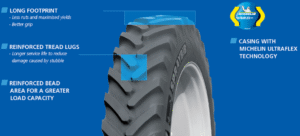
- Optimized Lug Design: All Michelin Ag tires feature R1W tread designs with lower void ratios, reducing excessive lug movement while maximizing traction through the entire life of the tire.
- Lug Patterns: Overlapping bars and 45° lug angles significantly improve ride comfort, stability and minimize flex. This design philosophy is evident in all Michelin Ag tires, but this is specifically important in tires like the Michelin Spraybib.
- Proper Inflation Management: VF technology allows up to 40% lower pressure compared to standard radials, reducing soil compaction in the field and improving ride quality on the road. Proper inflation pressures ensure an optimized footprint in the field and/or on the road that ensures stability and durability during operation. This minimizes tread squirm, reduces heat build-up, and extends tire life-critical for today’s heavy, high-speed equipment.

Bottom Line
Tread squirm isn’t just an annoyance—it impacts machine stability, tire life, and operator confidence. Michelin’s advanced lug designs, application specific lug designs, and technologies like Michelin Ultraflex (IF/VF) construction keep modern equipment performing at its best—both in the field and on the road.
Maxam Tire International
Greg W. Gilland: Vice President Global Agriculture
Every Ag tire is engineered and designed to:
- Provide the best possible ride.
- Deliver the traction required to move the machinery.
- Ensure a long-term serviceable life.
- Reduce the impact of compaction and soil damage to increase crop yields.
Tire tread squirm is a phenomenon that occurs when excessive movement of the tread blocks or lugs results in irregular wear, loss of traction, higher slip rates with increased fuel consumption, or premature wear resulting in tire removal.
There are several factors that can influence the impact of tread squirm such as tire design, proper inflation, and the mechanical aspects of the affected vehicle.
The use of proper inflation air pressure based on the vertical load on the tire ensures the tire’s tread or lug squirm will be minimized. The following should be considered when accounting for the impact of air pressure on the tire:
- Underinflation of a tire can lead to over-deflection in the sidewalls, increasing the lateral forces (Y) acting on the tire.
- The harder the working surface, underinflated tires can increase the tire or tread squirm resulting in greater tread wear or irregular wear.
- Tire overinflation results in a smaller tread footprint which will reduce the tire stability, leading to tread squirm as the load concentrates into a smaller contact patch.
Operation requirements or field/road work conditions can also impact the incidence of tread or tire squirm such as:
- Proper tire mounting and bead seating on the tire rim to ensure correct tread placement.
- Overload conditions exceeding or straining the casing through excess sidewall deflection resulting in more tread squirm.
- Vehicle mechanical issues like wheel alignment, wheel assembly, excessive “camber,”, poorly maintained suspension, or worn components.
- Excessive speed on firm surface or paved roads can also increase tread squirm.
- Repeated use on hard surfaces like paved roads or hard surfaces when transporting or “roading.”
- Unique vehicle dynamics like small tire contact patches on high clearance sprayers operating at high air pressures can exacerbate tire squirm or irregular wear if not managed correctly.
Mechanical forces, such as tire slip, can also affect tire squirm in agricultural applications. Here is what to keep in mind as a farmer or grower:
- Too Much Tire Slip = Loss of 25% to 30% of your transmitted power, more fuel consumption with increased tire squirm.
- Too Little Tire Slip = Too much weight (wheel weights, suitcase weight, or liquid ballast) can result in increased fuel consumption, soil compaction, and more lateral squirm due to tire over deflection.
- Zero (0) Slip = Only when “Roading” a tractor do you want the engine slip meter to drop to 0%.
- Below is the optimal tractor slip percentage (%) based on tractor type and working ground conditions:
- 2WD Tractors: from 10% up to 15% Slip Rate
- MFWD Tractors: from 8% up to 12% Slip Rate
- 4WD Tractors: from 8% up to 10% Slip Rate
- Hard Soils: Less Slippage for Maximum Engine Efficiency
- Soft Soils: More Slippage for Maximum Engine Efficiency
- Hard Surface Roads: 0% Slippage for Maximum Engine efficiency
Tire or wheel slippage is a calculation that the tractor drive system measures by assessing the number of revolutions based on the tire circumference, power, time, and the actual distance traveled If you travel 200 feet, and your actual tire revolution (circumference) distance traveled is equal to 220 feet traveled, your Wheel / Tire Slip rate = 10%.
The best any operator can do is to manage and review all the variables to ensure the following:
- Ensure proper tire mounting and alignment to minimize any additional mechanical forces acting on the tire tread.
- Verify that the tractor, harvester, or sprayer are weighed correctly to ensure that the resulting axle loads and required air pressures are set to the right setting.
- Set the right or best working inflation cold inflation pressure for a given load that meets speed required for both field and transport (roading) needs.
- Regularly inspect and verify that vehicle suspensions are not worn or not set correctly.
- Some tire squirm is normal with new tires as the tread stabilizes and the beads seat overtime within the mounted wheel.
Understanding tread squirm, and learning how to manage it, is a great asset for farmers and growers to get the best from their tires. Newer tread designs with tighter lug designs, less lug to void ratios, and more tread blocks can also minimize excessive tread squirm as the tires’ contact patch is enhanced.
Yokohama TWS
Chris Neidert: AG Marketing, Training & Development Manager for Trelleborg & Mitas Tires – North America
As you readers know, I always like to define the subject we are discussing.
I define ag tire tread squirm as the flexing or bending of the tread lugs when the tire is under a lateral or vertical load. This adversely affects the tire’s life, performance, and stability. Deep tread depths above 60/32, and air pressure mismanagement are the main causes. But there is hope, these effects can be minimized with proper tire management and selection.
Here are some, but not all, causes of Ag Tire Tread Squirm:
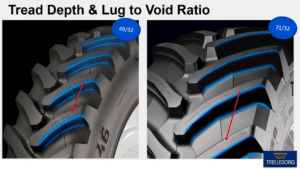
I am going to use the below graphic to discuss two causes of tread squirm.
Tread Depth: New tires with deep, stiff treads naturally have more squirm as the thick rubber flexes under load; this lessens as the tire is broken in and the tread starts to wear down. A good example is R-1 vs. R-1W tread depth tires. As I just mentioned, the tire with the shallower tread, 49/32 vs. 72/32 will have less squirm, but your application may call or need the deeper tread depth. A tractor that performs deep ripping or having to work tough soil will require that deeper tread tire. You can’t get away from that deeper tread. However, if your application is more roading or less traction is needed, think of a sprayer, you can get away with the shallower tread.
In the tire world, there are going to be trade-offs.
Lug to Void Ratio: The tire lug-to-void ratio describes the amount of tread versus open space in a tire’s design. A low ratio (more rubber, less void) minimizes tread squirm. It is better for hard surfaces like roads, as it maximizes the contact patch for grip and durability. Maximum traction may not be needed. A high ratio (less rubber, more void) will create more tread squirm. It is better for soft or loose surfaces like muddy or wet soil. The wider spaces allow the tread to self-clean by expelling debris and provide better traction. Our graphic points that out with the red arrows. Note the tire on the left has less or shorter open space or distance between the lugs.
Incorrect Inflation Pressure: Improper air pressure is a primary cause of excessive and uneven tread squirm.
Underinflation: Causes increased sidewall deflection and a larger contact patch, leading to the shoulder or outer edges carrying most of the load and flexing excessively, generating heat and accelerated wear on the edges.
Overinflation: Causes the center of the tread to bulge and carry the entire load, increasing wear in the middle of the tire and reducing the overall contact patch.
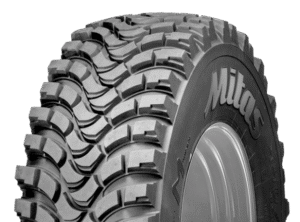
Tire Design: Use the tread pattern with the least amount of Lug to Void ratio. See our below examples. Moving from left to right – high amount of squirm to low amount of squirm. Remember, there is always a trade-off. Depending upon your application, you may need the design for maximum traction.


ISSUES CAUSED BY TREAD SQUIRM
Uneven and Premature Wear: Irregular wear patterns appear on the lugs. These significantly shorten the tire’s lifespan.
Heat Buildup: The tire’s internal structure gets damaged. Excessive heat gets generated by the friction and constant bending of the rubber components. Blowouts and premature failure result.
Reduced Stability and Performance: Traction, stability and handling are compromised by the negative effects of tire squirm on the contact patch. This is very critical in a sprayer operation. Vehicle stability is particularly important when you are driving down the road at 40 mph.
Decreased Fuel Efficiency: The engine works harder using more fuel because the tire’s underinflation causes excessive flexing.
MITIGATING TREAD SQUIRM
Maintain Proper Inflation Pressure: To ensure an optimal contact patch, consult your tire manufacturers load/inflation tables to check and adjust your tire pressure based on (road vs. field use) application.
Choose the Right Tire Type & Tread Design: As we discussed above with our different tread patterns/designs, select tires designed for specific conditions.
Talking about tread design, Trelleborg tires utilize our trademarked Progressive Traction. The extra step off the lug not only increases traction but stabilizes the bottom of the tread lug reducing/minimizing tread squirm.
All information is provided in this blog solely to provoke thought. All deductions made from information on this site must be confirmed by Certified Ag Tire Dealer & Tire Manufacturer before use. Ag Tire Talk does not recommend anyone conduct tire service work with exception of Certified Ag Tire Dealer Professionals.