
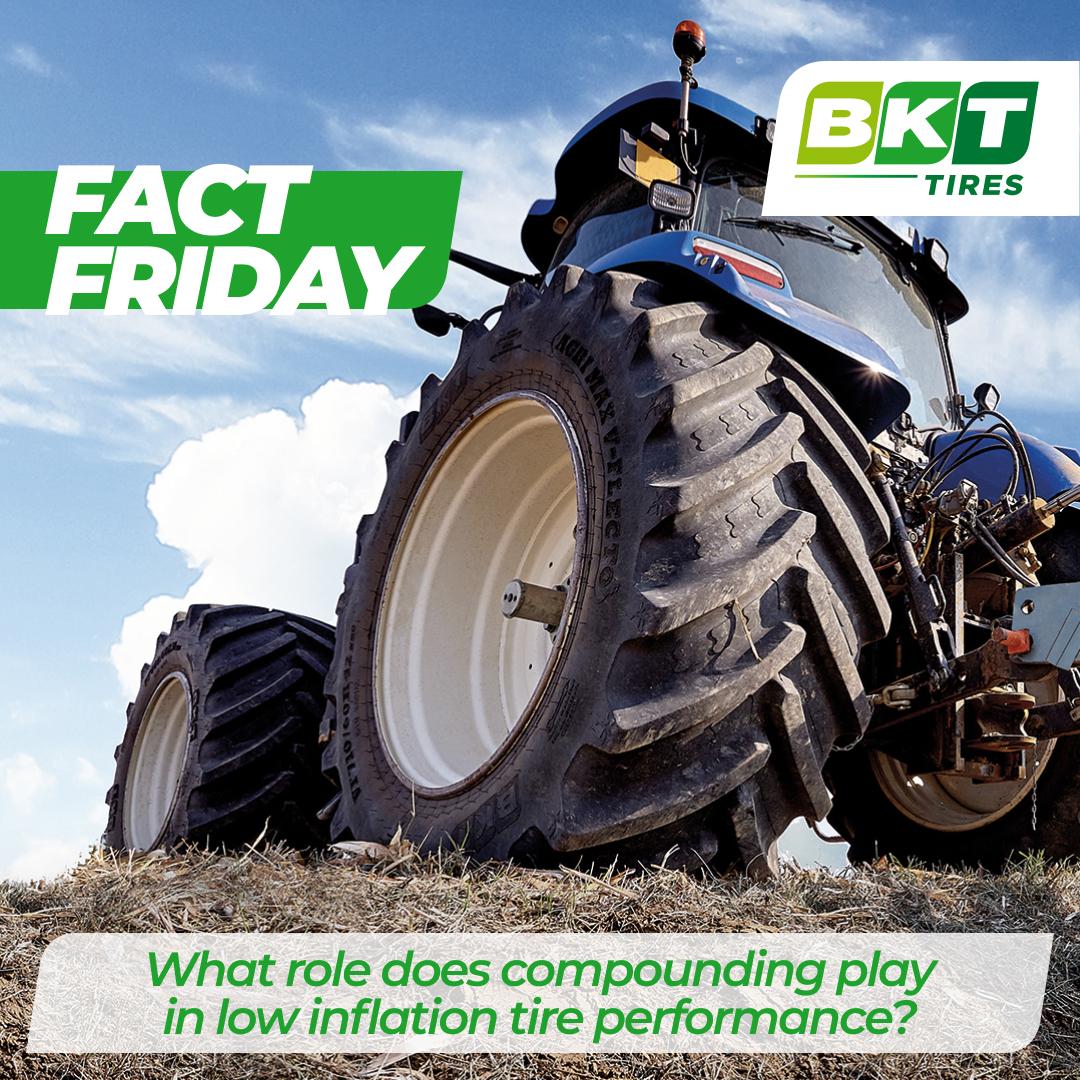
𝐓𝐡𝐞 𝐢𝐦𝐩𝐨𝐫𝐭𝐚𝐧𝐜𝐞 𝐨𝐟 𝐜𝐨𝐦𝐩𝐨𝐮𝐧𝐝
Compounding involves mixing raw rubber with additives and fillers to achieve the chemical and mechanical properties required for the application. Fillers can make up a significant portion of a rubber compound, and their dispersion throughout the polymer matrix is critical to the performance of the cured rubber. Poor filler dispersion weakens the polymer-filler blend, causing premature wear, premature aging of the tires, cracking, and tread separations, thereby affecting durability and resistance. Conversely, good dispersion minimizes these problems and improves the tire’s longevity, tread performance, and load-bearing capacity.
As a result, good compounding and good filler dispersion are essential for producing a durable agricultural tire capable of handling heavy loads and the high levels of flexing associated with low-inflation operation.
How compounding is formulated and its impact on tires.
For agricultural tires, compounding is pivotal to ensure the handling of heavy loads, reduce contact pressure with the soil, and reduce resistance at low air inflation pressure.
Low inflation pressure allows the tire to operate with greater deflection and a larger footprint, which can improve traction and help reduce soil compaction. The rubber compound therefore needs to be correctly formulated to withstand high levels of flexing while maintaining its mechanical properties, fatigue resistance, and durability.
However, compounding does not work alone: the ability of a tire to operate at low inflation pressure is the result of the combination of tire geometry and tire construction, especially the casing design, along with the compound formulation.